Posti has built intelligent planning tools that have proven their impact in real decision‑making at scale. Clear visualizations give an immediate overview, and detailed simulations enable deeper analysis when needed. This article summarizes what has made these tools impactful for business and outlines the technical and organizational foundations behind them.
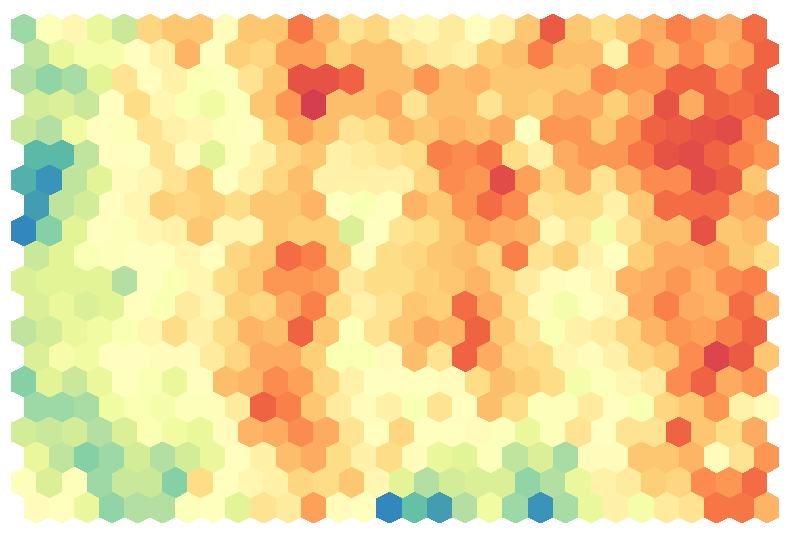
Simple UX with a Structured Path for Better Decisions
A key reason our tools have worked so well is that they offer a clear starting point and a structured path from overview to detail. Users begin with intuitive visualizations—especially heat maps—that highlight patterns and differences instantly. This makes it easy to understand where attention is needed without reading long reports or navigating complex dashboards.
Behind these visual layers, forecasting models provide underlying intelligence. They estimate potential demand and system behavior, giving users confidence that the patterns they see are grounded in data rather than assumptions. This connection between simple visuals and robust predictions is what turned the tools from “interesting analytics” into something that supports real decisions.
For situations that require more depth, users can run detailed simulations. These reveal how changes ripple through the system, how different scenarios compare, and where tradeoffs occur. The important part is that the workflow remains straightforward: start with a heat map, explore a scenario, and go deeper only if necessary. This flexibility—lightweight when speed matters, but detailed when decisions require evidence—has been central to the tools’ adoption and impact.
Key Enablers: Technical Foundations
Several technical enablers have made it possible to build impactful tools that are both fast and reliable:
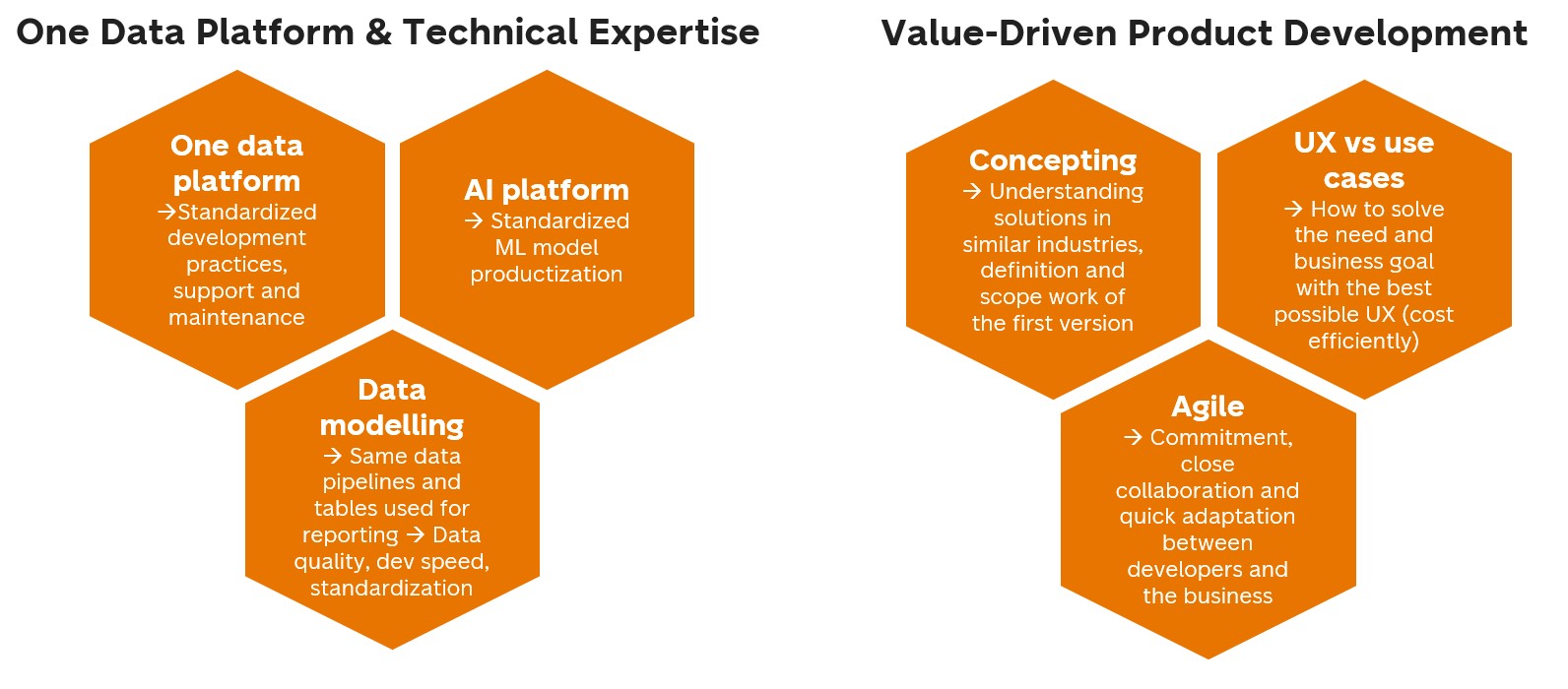
One data platform provides a shared environment with standardized development practices, support, and maintenance. This reduces fragmentation and ensures that all tools operate on consistent, well‑managed infrastructure.
Data modelling uses the same pipelines and tables across reporting and machine learning. This improves data quality, accelerates development, and ensures that all analytics speak the same language. Because the structure is shared, improvements automatically benefit both BI and AI use cases.
The AI platform enables standardized model productization. Models can be deployed, monitored, and iterated systematically, ensuring stable performance and predictable behavior. This is essential for scenario‑based tools that rely on fast and repeatable predictions.
Together, these foundations created the technical stability and maintainability required to build tools that users can trust.
Key Enablers: Human & Design Foundations
Equally important to the technical foundation is the way we design and build solutions.
Early concepting helped us define a realistic and valuable first version by examining how similar challenges are solved in other industries and aligning early on what a tool should achieve with the users and business stakeholders. This ensured a focused scope and a clear understanding of which features matter most for delivering business value.
UX driven by concrete use cases kept the tools simple and effective. Interfaces were designed around the decisions users need to make—avoiding unnecessary complexity and limiting features to what supports those decisions. This made advanced analytics understandable and accessible and also kept implementation cost‑efficient. In practice, “less is more” proved true: simpler but still powerful tools to a selected high-impact use case are adopted faster and used more consistently.
Finally, agile collaboration between developers and business teams enabled rapid feedback and continuous adjustment. The tools evolved based on real usage rather than assumptions, strengthening adoption and ensuring long‑term relevance.